
Think first, act fast, save a life
While we might be enjoying the wonderfully warm weather, heatstroke is a serious threat to pets.
Our vets and animal care team have shared lots of advice on keeping your pets cool and safe.
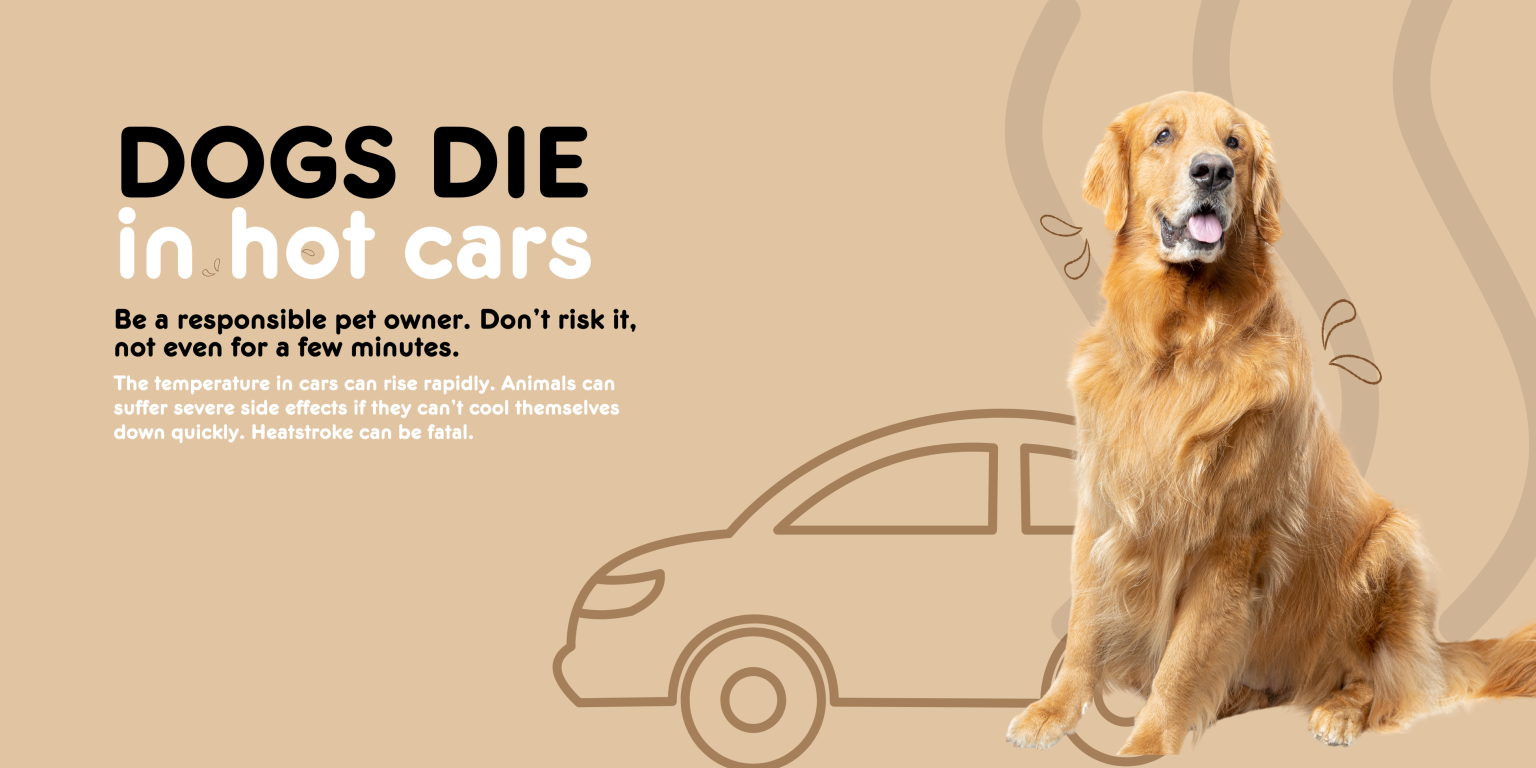
Dogs die in hot cars
What is heatstroke?
Heatstroke is a life-threatening condition. When an animal’s body temperature is too high and it cannot naturally reduce the heat, it begins to impact organs and muscles, causing them to fail. Without urgent action or treatment, animals suffering from heatstroke can die.
While we’re enjoying a spectacular summer, it might be tempting to hop into the car and head down to the beach. But that quick ride could be dangerous for your dog. Heat exhaustion can occur within minutes, and the side effects can be fatal.
Red flags to look out for
Excessive panting
Lethargy and weakness
Increased heart rate
Bleeding or inflamed gums and a bright red tongue
Vomiting and diarrhoea
Confusion and dizziness
Seizures
Collapsing
Unconsciousness
Stay out of the sun
Direct sunlight can burn delicate paws and skin. Avoid leaving water or food bowls in direct sunlight. Patios and pavements can also get too hot. The rule of paw is, if you can’t touch the surface for more than 5 seconds with the back of your hand, then it’s too hot for your pet.
Don’t forget hosepipes too, the water sitting in the pipes can scald. Let the water run until it is fresh and cool.
Did you know that pale animals or animals with less fur can burn more easily? Paws and the skin around the eyes and ears are particularly vulnerable. You can apply pet sun cream regularly to avoid burning.
Humidity – not such a hot topic
While we know about the dangers of sun exposure, we can miss the harm of humidity. Humidity is a measure of how much moisture there is in the air.
Animals rely on panting to cool themselves down, as they can’t sweat like humans. Cats and dogs pant to help evaporate the moisture from their bodies, in turn cooling them down. With increased humidity, it becomes very difficult for animals to cool down, and you may notice your pet panting excessively.
Cooler doesn’t mean safer – even if it appears cooler in temperature, for example, later in the day, humidity levels can remain high. Keep this in mind if planning a walk, as your pet may struggle with how quickly and effectively it can cool down.
Is it worth the walk?
Avoid taking dogs outside or for walks during the hottest times of the day. Early morning walks are best as the air has had time to cool overnight. Evening walks may not always be advisable, especially on very hot days, as the evening sun can still be strong, and the temperature and humidity levels can remain high after a long day of heat.
Your dog’s normal exercise routine could be a real danger on a hot day. You can try different activities to keep them busy and entertained, try lick mats and puzzle feeders. Why not pop these in the fridge to keep cool?
If you need to take your dog out for a walk, stick to shady areas and keep the walks short. Take some water for yourself and your dog.
Keep your pet cool
Animals should have access to cool, clean water at all times. Frozen treats, icy water and ice cubes are also a great way to keep them cool.
If you have a large tray or a small paddling pool, shallow fill with cool water for your pet to have a splash. Remember to set this up in the shade and be mindful of the sun as it moves through the day.
Hutches, rabbit runs and cages can get extremely hot in the sun. Move them into the shade, provide lots of ventilation and give your small furry friends lots of room to stretch and cool down.
Cool them quick!
To cool down, cats and dogs rely on evaporation to reduce body temperature. They do this through panting, but it’s quite inefficient if they are already suffering from heat exhaustion.
Your priority is to cool your pet down quickly. You can cool your pet down by pouring water over them, avoiding the head, or sitting them in front of a fan or AC. This is a key step in increasing evaporation and speeding up the cooling process.
Give your pet plenty of cold water or a bowl of ice.
Don’t cover animals in cold or wet towels. They need to release heat from their bodies, and towels only further trap warm air, making them even hotter and more susceptible to heat stroke.
Tip from a vet: Save your vet's phone number in your phone so you have it when you need it
Who’s at higher risk?
Certain breeds or animals with health concerns will be at higher risk of heatstroke than an otherwise healthy animal.
Bulldogs, Pugs, Boxers, and Shih Tzus have short snouts, making it harder for them to breathe efficiently and cool down through panting.
Huskies, Newfoundlands, Akitas, and Golden Retrievers can struggle in the heat as their thick or double coats trap warmth. It is advisable to regularly comb your pet and have regular trims to make cooling down easier.
Larger dogs such as Saint Bernards and Great Danes generate more body heat and take longer to cool down.
Over-exhaustion is a concern in energetic breeds like Spaniels or working dogs. They may not know when to stop, and this could lead to heat exhaustion.
Extra body fat acts as insulation and can make it harder for overweight dogs or heavier dogs to lose heat through panting.
Older dogs and puppies are also at risk. With older dogs, reduced cardiovascular function and slower responses to temperature changes can put them at higher risk. With young bouncy pups, they are still developing the ability to regulate their temperature and can overheat quickly.
If your pet suffers from a heart condition or respiratory difficulties, it’s at a higher risk of heat-related illnesses, as breathing and cooling are much more laborious.
Did you know that certain medications, such as diuretics or sedatives, can impact the body’s ability to cope with heat?
If you are concerned about your pet’s health, get in touch with your vet.
What should you do if you’re worried about your pet?
Cool fast, and call your vet
Provide a fan or AC. This can help speed up the evaporation process and, in turn, cool them down faster.
Encourage your pet to drink cold water
Pour or submerge them in cold water, avoiding the head
Call your vet while you’re cooling your pet, follow their instructions
Cool your car before you transport
It can be tempting to bundle your pet into the car and rush to the vet, but if you can begin the cooling process first, this could make a huge difference.
Dogs in distress
Even on a cloudy or mild day, the temperature in the car can rise much more quickly than the temperature outside. Leaving the window or fan on is not enough.
What should you do if you see a dog in distress?
If you are concerned about your pet, we advise you call your vet as soon as possible. Remember to save their number in your phone so you have it to hand if you need it in emergencies.
If you are concerned about an animal potentially at risk of heatstroke, call the JSCPA reception during our opening hours on 01534 724331 or our ambulance on 07797 720331 if out of hours. Alternatively, if you spot a dog in distress trapped in a car, you should call the police on 999.
Resources
Use this free resource pack to help raise awareness.
A4 Posters