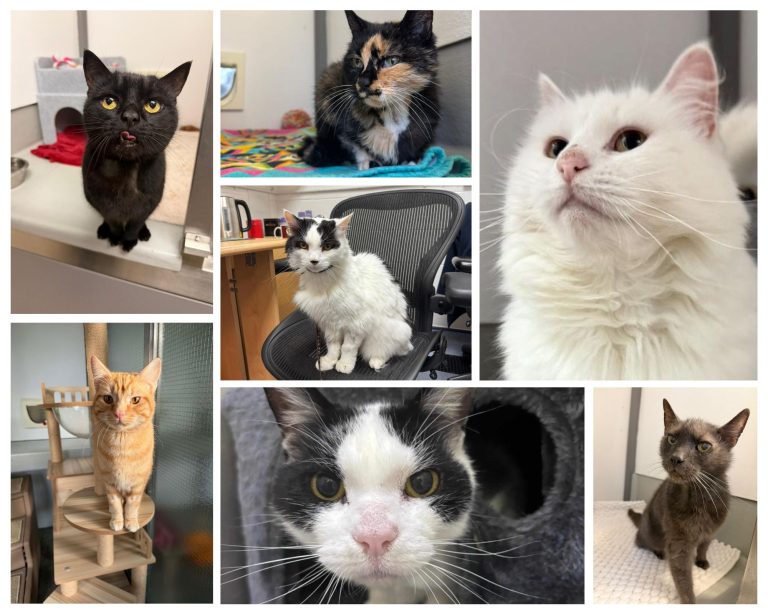
How dogs and cats are first introduced can significantly shape their future relationship. Once a relationship breaks down and one of the animals feels threatened, it is difficult to repair. Even if your dog has lived with a cat before, new cats may not necessarily be tolerated. If they are going to get along, the dog must not be allowed to intimidate or frighten the cat. A slow and cautious introduction is essential to avoid strong or negative reactions.
1. Settle the new cat into their new home
Cats can find moving to a new home stressful, so they need time to settle before being introduced to the whole house and the resident dog. The new cat needs their own room in the house so that the resident dog can be kept away. They must have everything in there that they need: a litter tray, scratching post, toys, bed, food and water. Place a Feliway plug-in diffuser in the room at least 24 hours before your new cat arrives to help them settle in and feel less anxious.
The new cat needs at least a week in their separate area to allow them to get used to their new surroundings, their new owners and their new routine. Some cats might take longer than this, and they should be allowed to take the time they need. Your resident dog might sit outside the door and start sniffing the new arrival; that’s okay, but don’t take introductions any further than this to start.
2. Scent Swapping
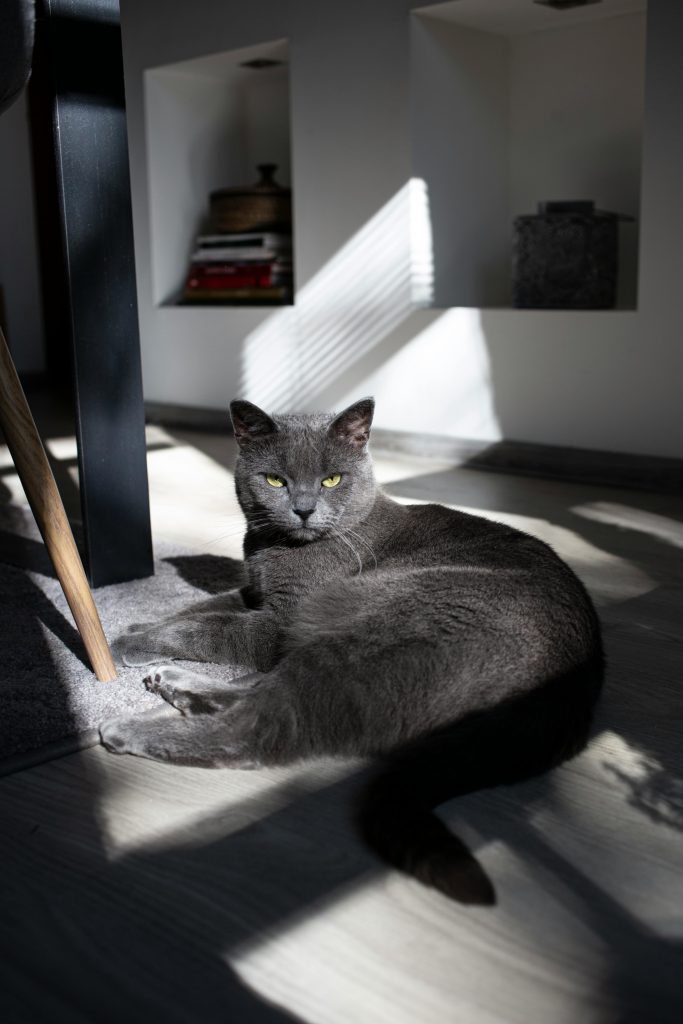
Scent swapping is an important stage; it allows animals to assess and be gradually introduced before seeing each other. When you meet the new cat at the shelter, take an item from your household, such as a cushion or small blanket that can go into the cat’s kennel so they can get to know your home smell. When the new cat comes to your house, bring something from their kennel, such as a towel they lay on, so a familiar scent is with them.
Once the cat has settled in their room, you can start scent swapping. Take two damp cloths and gently wipe them over both the dog and cat’s forehead, cheeks and sides, then take the cloths into each other’s rooms. Don’t rub them with the others scented cloth, and don’t take it up to their nose to smell. Place it in the room without making a big deal about it and allow them to smell it in their own time. Then rub the cloth over areas where they feel relaxed, such as windowsills, near radiators and certain chairs. If they smell the cloth or areas you’ve wiped it on and don’t show much reaction, give them a little treat or a little fuss, whatever they really like, to reward the nice behaviour. If the cat hisses, actively avoids the scented items or shows any negative behaviour towards the scented items, just ignore the response; please don’t tell them off. You should keep doing this daily with fresh cloths wiped over the cat and dog, and their negative response should lessen. You can also swap the items the animals have slept on and place them in each other’s spaces.
3. Visual Introductions
Once they are used to each other’s scents, you can start letting them see each other gradually. Initially, start by opening the door with a barrier separating them, so they can greet each other without the possibility of a fight or chase. Don’t rush it and don’t force it by picking up the cat and placing them at the door or forcing the dog to sit at the barrier. Let them approach the door when they are ready.
In preparation for the dog and cat meeting in the house without barriers, the new cat needs time to explore and familiarise themselves with their new surroundings without the resident dog. This enables the new cat to learn the layout of the house, find escape routes and hiding places. Ensure that your resident dog cannot meet the new cat during this time. This will allow the new cat to keep themself safe if there is any hostility from the resident dog when you introduce them without barriers.
After a few days of the cat and dog seeing each other through the barrier, if there are no negative behaviours shown from either animal, you can remove the barrier and allow the new cat to leave the room when he or she is ready. Have one person sit with the new cat in their room and open the door whilst another person is with your dog in another room or some distance away. Your dog must be wearing a lead to prevent chasing and overwhelming the cat at this crucial point. Chasing is likely to scare your cat and slow down the introduction process, and there is a good chance the dog will learn that chasing a cat is fun.
Watch both animals to see how they interact and if all is calm, reward them with a tasty treat. Positive cat body language to look out for could be slow blinking, gentle tail swishing, sniffing and relaxed ears. You also want to associate the presence of the cat with rewards for your dog’s calm behaviour. If your cat is staring, tail twitching, flattened ears or any other negative behaviours, lift a towel between them to break the eye contact and then put the new cat back in their room.
When they first meet without any barriers, you need to stay calm and keep the interaction short (about 15-20 minutes). Keep a lookout for negative behaviours. Build up the length of time they are allowed to interact each day. From time to time, call your dog to you and reward them with a treat for calm behaviour. At the end of the session, have some one-to-one time with your dog while another person makes a fuss of your cat in their room. Any forcing or rushing on your part will only make the situation more stressful and the settling in process will be prolonged. Some cats and dogs become best friends, and others will merely learn to tolerate each other.
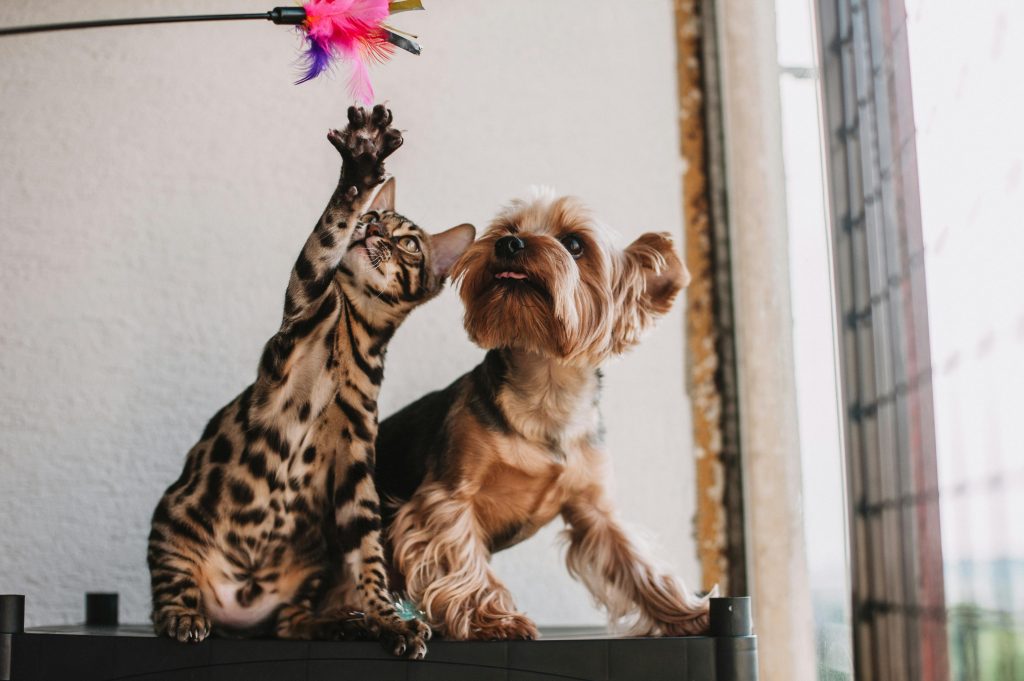
Once you are sure they are not going to fight or chase, then you can allow access to the whole house. The pets will eventually find their own safe places to sleep and will settle into their own routines. It is important that you never leave the dog and cat together unattended until you are happy that they are safe together, even if your dog has lived with cats previously. Make sure that there is enough space for both animals and that both can access their food, litter trays etc., without encountering the other pet if they don’t want to.