
Introducing your new dog to the family can be a very exciting time for everyone, but it is likely to be a stressful time for the resident cat. It needs to be done carefully, safely and at a pace that suits all the pets. Be prepared for the process possibly taking a few weeks; it is best to take it slowly to ensure the best chance of success. Every dog at the JSPCA undergoes a behaviour assessment before being made available for re-homing, which can help determine compatibility with other pets. During this assessment, staff can determine if the dog is potentially compatible with cats, but compatibility is not guaranteed, even if a dog appears good with cats in the assessment, its behaviour in a new home may vary. It is important that you manage the introduction to your family carefully and that your new dog and cat are always supervised until you are sure everyone is comfortable and safe.
It is not unusual for cats to take a dislike to the new dog, and some may disappear upstairs or be reluctant to stay in the same room as the dog for several weeks. If the cat has not met dogs before, this newcomer is likely to be quite stressful for them, so be patient and take it slow to prevent them from possibly running away from home.
Cats and dogs should not be left together unattended for the first few weeks, or until they are relaxed in each other’s company. When they are left alone together, always ensure the cat has an escape route.
1. Before bringing the dog home
Prepare your home so your resident cat has plenty of hiding spots. Cats often feel safer when they can go up high, so provide secure elevated resting places where your cat can retreat if they feel frightened or stressed by the dog. Being up high allows the cat to observe the dog from a distance where he or she feels safe.
Your new dog is bound to be interested in a cat’s litter tray and food bowls, so these may need to be moved to places where the dog can’t access. It is important that your cat can toilet and eat without being disturbed. Make sure your cat has its own water bowl and doesn’t need to share with the dog. You may need to move the cat’s things before the dog arrives; do it in plenty of time to allow the cat to adjust to the changes. This helps reduce stress and avoid problems with your cat being too afraid to eat/drink, or use the litter tray once the dog arrives. Consider putting up baby gates with cat flaps, so your cat can access the whole house, but the dog is limited to certain rooms.

2. Scent swapping
On the day you bring the dog home, keep your cat in one of their favourite rooms with everything they’ll need, such as a bed, food, water, litter tray, scratching post and toys. Let the dog come in and explore the house, except for the room the cat is in. This gives them a chance to learn the layout of the house and get used to the scent of the cat. Once they’ve had a good look around, place the dog in a secure room with everything they will need, such as a bed, food and water. Once the dog is secured in the room, let the cat out of their room to start wandering around the house. This will allow them to start getting used to the scent of the new arrival. Scent is a very important sense to cats and allows them to slowly adjust to the newcomer. Repeat this over a few days, not allowing the animals to actually see each other but just getting them used to each other’s scents. Monitor the cat’s reaction to the new smell. If you see any negative reactions, then continue doing scent swapping for longer until the cat seems relaxed. Monitor the dog’s reaction and prepare them to meet face-to-face with basic training, such as being calm on the lead and returning to you when you say their name.
3. Visual Introductions
Take the dog for a good walk first so that they are calm when they meet the cat. If the dog is still excitable after their walk, give them something calming to do afterwards, such as a Kong or a chew. Once calm, place the dog in a crate (only if crate trained) with things to occupy them, such as a toy or chew. If the dog is not comfortable in a crate, use a baby gate to keep the dog secured in a separate room from the cat, allowing them to see the cat but not chase it or go right up to it, potentially scaring the cat. If the dog is big enough to jump over the baby gate, hold them on a lead as well. Choose a room in the house for the visual introduction where your cat can have access to high places and enter on their own from their room. Open the door to the cat’s room and allow the cat to leave when he or she is ready. Don’t pick them up and place them in the room with the dog; the cat needs to feel like they have the choice to move about freely in order to feel safe. Give the cat treats and attention to create a positive association with seeing the dog.
Once the cat is comfortable with the dog in the crate or behind the baby gate, the next step is to introduce the dog on a lead outside the crate/room. When the dog sees the cat and is calm, reward their calm behaviour with a treat. If the dog seems a bit overexcited, call their name to get their attention and reward them for focusing on you. You will need two people for this, so one person can reward the cat and the other can hold and reward the dog. If the dog is too excitable, stares at the cat or won’t take the treats, stop the introduction and try again later when the dog has been exercised and is calmer. Keep these introductions short and do them a few times throughout the day.
Always allow the cat to choose to approach when they are ready, and don’t force any interactions. You might see hissing and growling from your cat because they are likely to be scared of the new dog. This can be normal, and the cat needs time to get used to the dog. Please don’t tell the cat off or use any other type of punishment to stop this behaviour, as it will only make the cat feel even more stressed. Take this behaviour as communication that the cat isn’t ready for the next step. Some cats will take longer than others to get used to the new arrival.
When the dog and cat are relaxed around each other with the on-lead meetings, you can try to have the dog off lead but very closely monitored. If the dog wants to chase the cat, they need to be put back on the lead. Don’t allow them to practice chasing; it’s most likely a lot of fun for the dog, and it can be very difficult to get them to stop this behaviour. Being chased would be very stressful for your cat.
Don’t leave the cat and dog together unsupervised and take things very slowly, allowing them to become used to one another gradually at their own pace. Before considering leaving them alone together, you need to be certain that the dog won’t chase the cat. If you are not certain, make sure they are separated when you are out and that the cat has places they can go that the dog can’t, even when you do start to leave them together unsupervised.
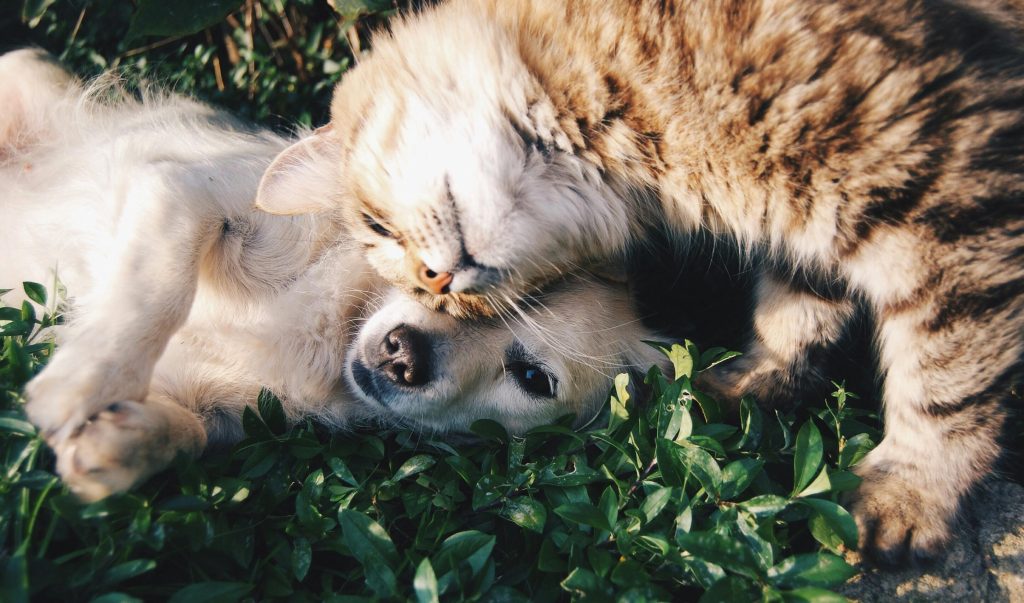
Hopefully, the cat and dog will become friends, but there is a possibility that they will only tolerate each other. As long as they can live peacefully and relatively stress-free together, that’s okay.