
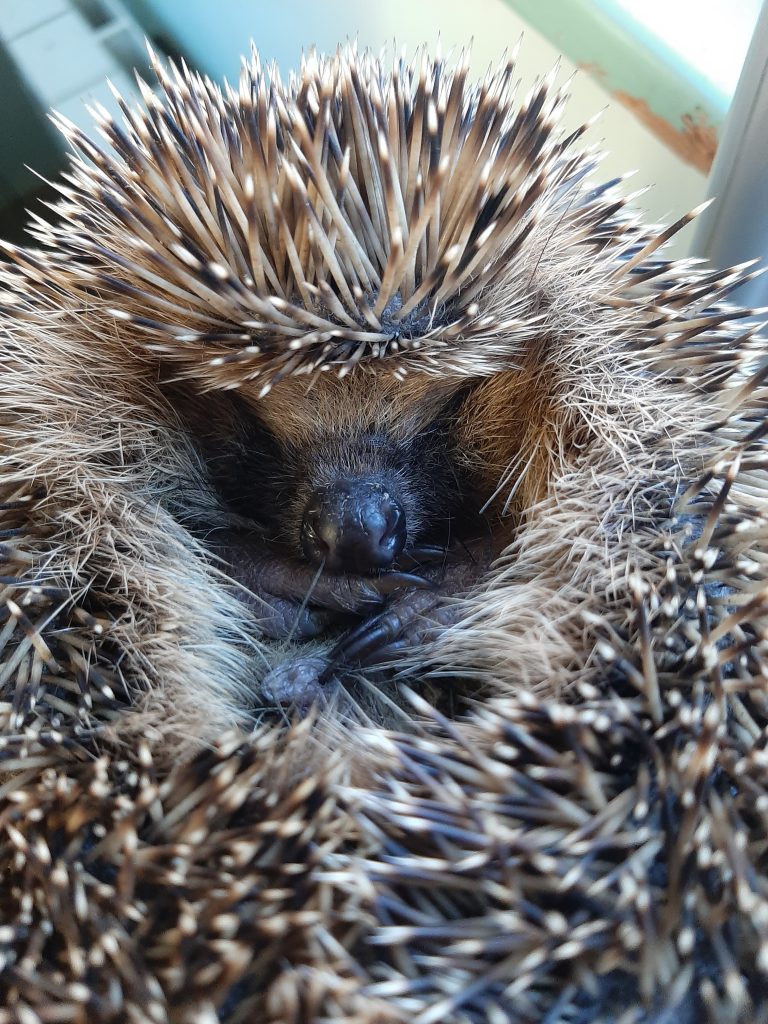
The JSPCA works alongside the Jersey Hedgehog Preservation Group to care for sick, injured, lost and orphaned hedgehogs. Giving these much-loved animals the best possible chance of recovery and release back into the wild.
Hedgehogs in Jersey are facing more challenges than ever before. Habitat loss, hedge cutting for branchage, and a changing climate are all taking a toll on their survival. Hotter, drier summers make it harder for hedgehogs to find enough food and successfully raise their young. At the same time, warmer and wetter winters can disrupt hibernation, leaving them active when food is scarce and putting extra strain on already vulnerable populations.
There are many simple ways you can help hedgehogs at home, from safe feeding and building your own hedgehog house to creating safe passageways they can use to travel between gardens. Here are just some of the ways you can make a real difference for these wonderful animals:
Feeding hedgehogs
-
Each evening, place a dish of plain kitten biscuits or meat-based dog or cat wet food in a quiet, sheltered area of your garden. At the JSPCA, we’ve found that Royal Canin Mother and Baby Cat dry biscuits are a firm favourite with hedgehogs. They’re high in calories, rich in vitamins, prebiotics and protein, and, judging by how quickly they disappear, they clearly taste great! Specialist hedgehog food can also be used, but it’s important to note that it isn’t regulated and quality can vary, so always do your research before buying.
- If cats are getting to the food, try placing the dish under a simple brick shelter with a hedgehog-sized gap. The top half of a cat carrier can also work well as a mini shelter; just remember to weigh it down with a brick to keep it secure.
- If the food isn’t eaten overnight, remove it the next day and replace it with fresh food in the evening. Don’t forget to put out a shallow dish of fresh water too!
- Research suggests that varying how and where food is offered can be beneficial. Moving the dish around and scattering food in a more natural way helps encourage natural foraging behaviour and reduces competition for food.
IMPORTANT: Keep it clean! This will help reduce the risk of spreading diseases and parasites between the hedgehogs visiting your garden. Keep hedgehog dishes & cleaning equipment separate from your own – well away from food preparation areas. Clean surfaces & dishes after every use using an animal-safe disinfectant, rinse thoroughly and air-dry before re-use.
Remember – hedgehogs are wild animals, so wear gloves and thoroughly wash hands and forearms with soapy water afterwards.
Avoid any interaction between dogs and hedgehogs. Sadly, dog bites frequently cause injury or death to hedgehogs.

How to create a hedgehog passegway
Hedgehogs need to travel considerable distances in search of food, mates, and nesting sites. The average hedgehog can cover around 2km in a single night! Team up with your neighbours to create a small hole in your fence or dig channels beneath garden boundaries to connect your gardens and give hedgehogs safe access.
You will need:
- Your neighbours’ cooperation
- Ruler
- Pencil
- Coping saw
- Sandpaper
Step 1
If your neighbour agrees, remove a fence panel. You could also leave the fence up and use a pad saw or ‘jab saw’ instead of a coping saw.
Step 2
Measure and mark a 13cm x 13cm hole at the bottom of the panel.
Step 3
Cut out the marked hole.
Step 4
If there are very rough edges, use sandpaper to smooth them down.
Step 5
Put your fence panel back. Your hedgehog highway is now open for business!
Check out this quick video by The British Hedgehog Preservation Society
How to build a hedgehog home
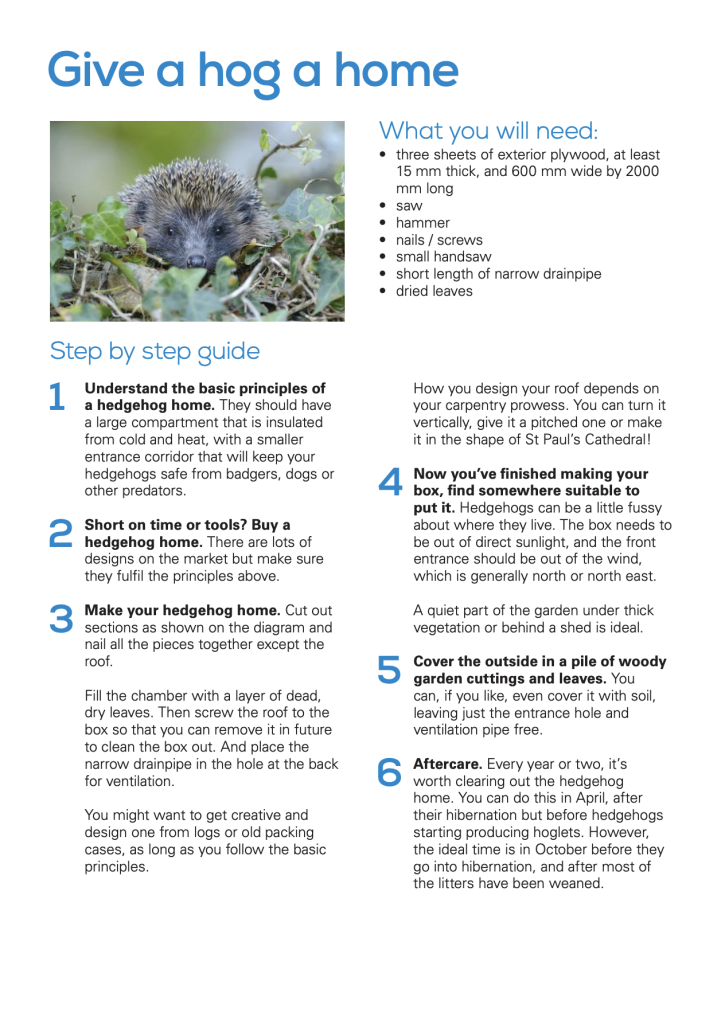
Hedgehogs, like all wildlife, need safe places to hide and sleep. Providing a hedgehog home is an easy way to welcome them into your garden and encourage them to stay.
Whether you live in an urban or rural area, you can help these adorable creatures by offering food, water, and shelter.
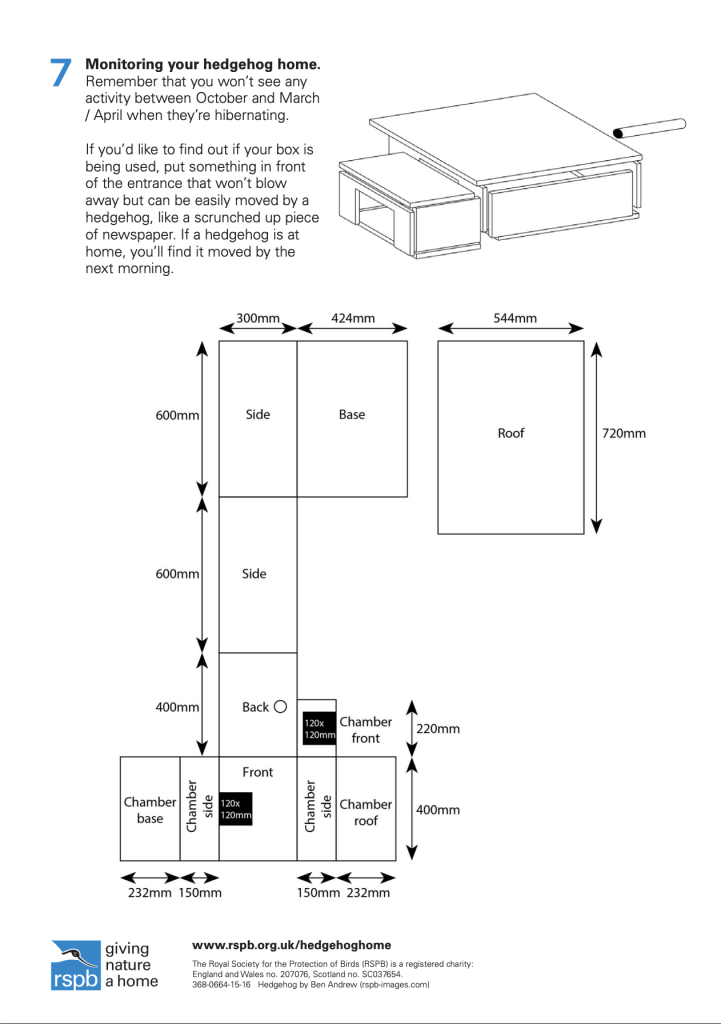
Check out the RSPB guide to making your own Hedgehog home, or buy one and support this wonderful charity at the same time!
Please always take care when tidying your garden, especially when raking, digging into compost heaps, strimming, or mowing. Hedgehog nests can be very difficult to spot, as they often blend in with their surroundings. Always check for hedgehogs before starting work, and if you find any, keep a respectful distance.
Jersey Biodiversity Centre – Record your sightings of wildlife in Jersey https://www.jerseybiodiversitycentre.org.je/
*Please note that it is not usual for a hedgehog to be out in the daytime*
If you find a hedgehog of any size lying out of their nest during the daytime (unless the nest has been disturbed), carefully pick them up using gloves, place them in a box, and keep them warm. Call the JSPCA or the Jersey Hedgehog Preservation Group and drop them off or arrange collection as quickly as possible. Please do not try to rehabilitate the hedgehog yourself; it is an offence for a person to keep, or to have in his or her control or possession a protected wild animal without a license. If you find any wildlife in need of help, please call us. We are available 24 hours a day, every day.