If you see an injured squirrel, please call the JSPCA on 01534 724331 or, if out of our opening hours, please call 07797 720331.
Most prey animals are very good at hiding their pain to avoid being picked on by predators, so if you notice an injured squirrel, it will be in a very bad way and will need medical attention. At all times, when handling squirrels, you must remember to keep yourself safe. Their teeth are strong and sharp enough to open nuts, so they can give a nasty bite. If you need to handle a squirrel, wear strong gloves or use a thick towel. Squirrels are fast, even when injured, so make sure you have somewhere secure to keep them until help arrives.
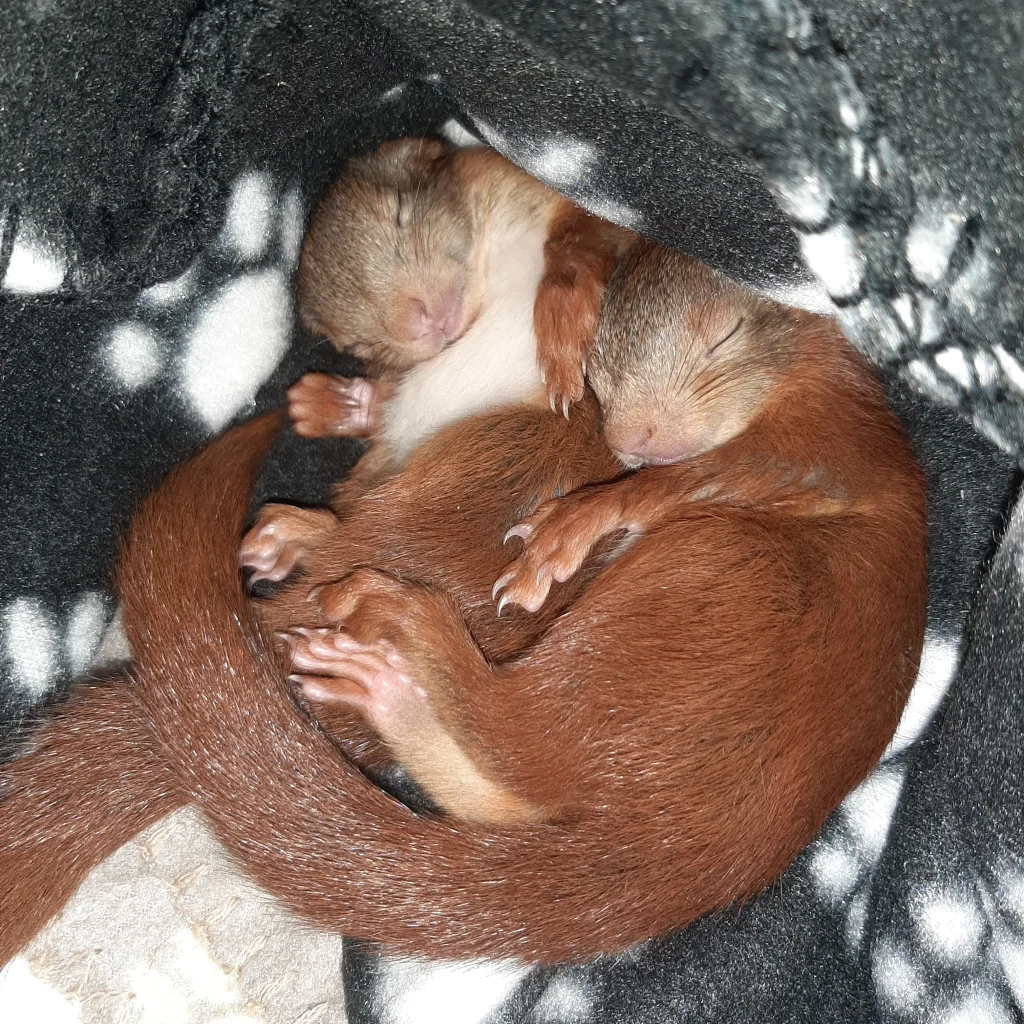
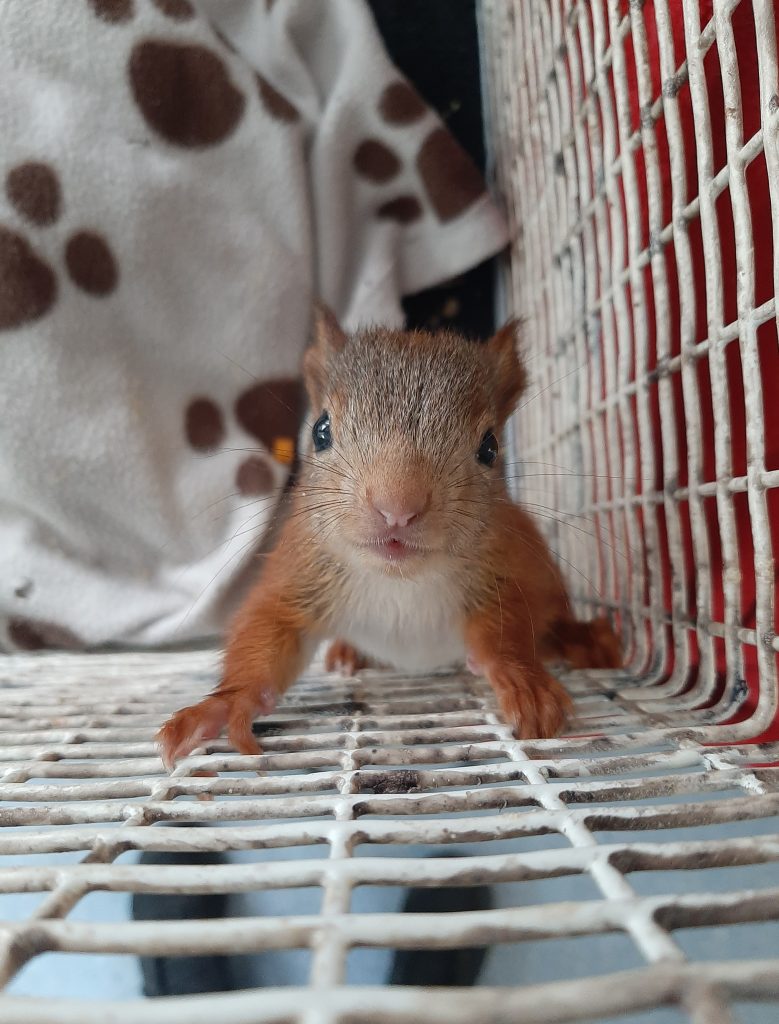
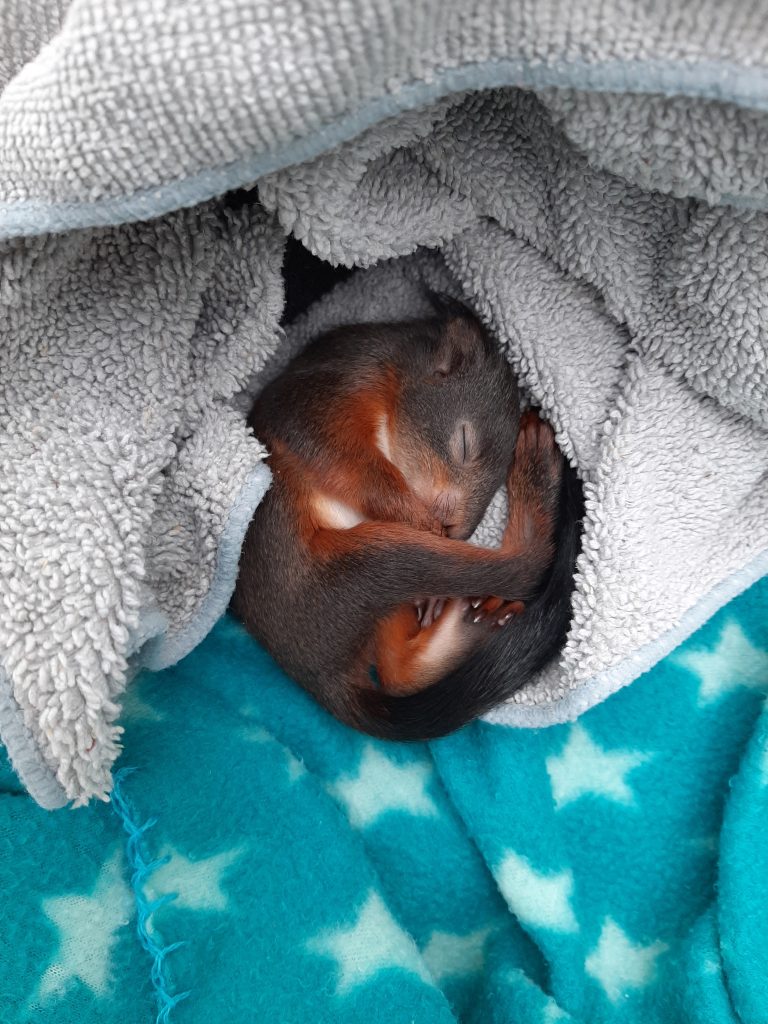
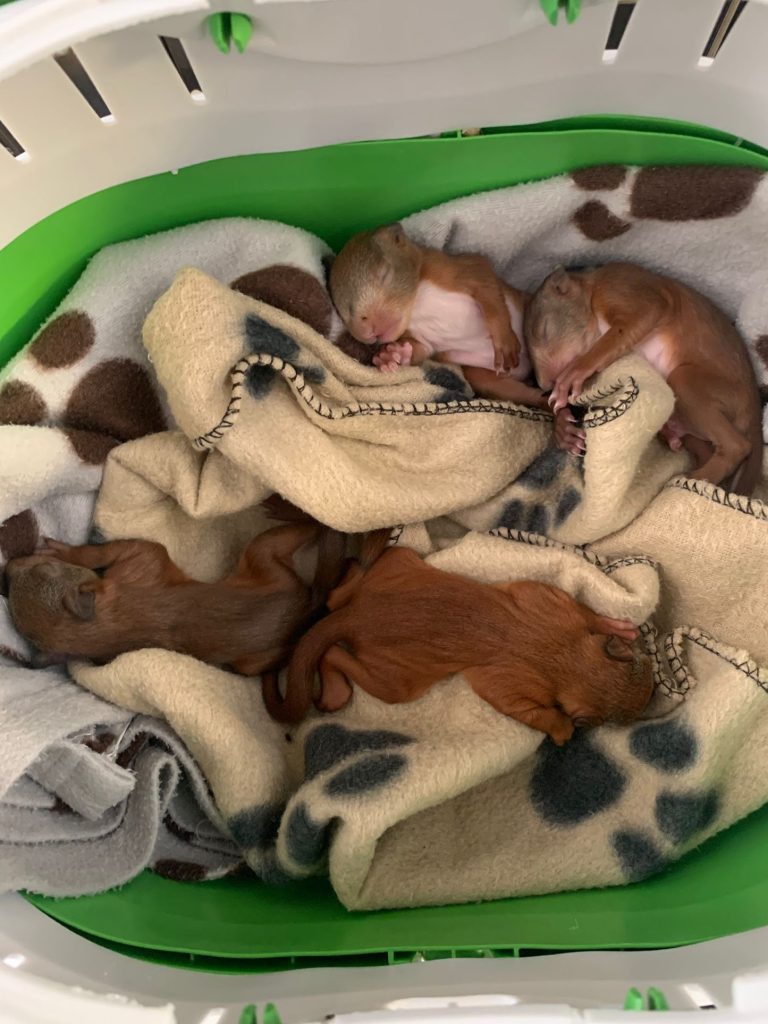
Baby squirrels (kits)
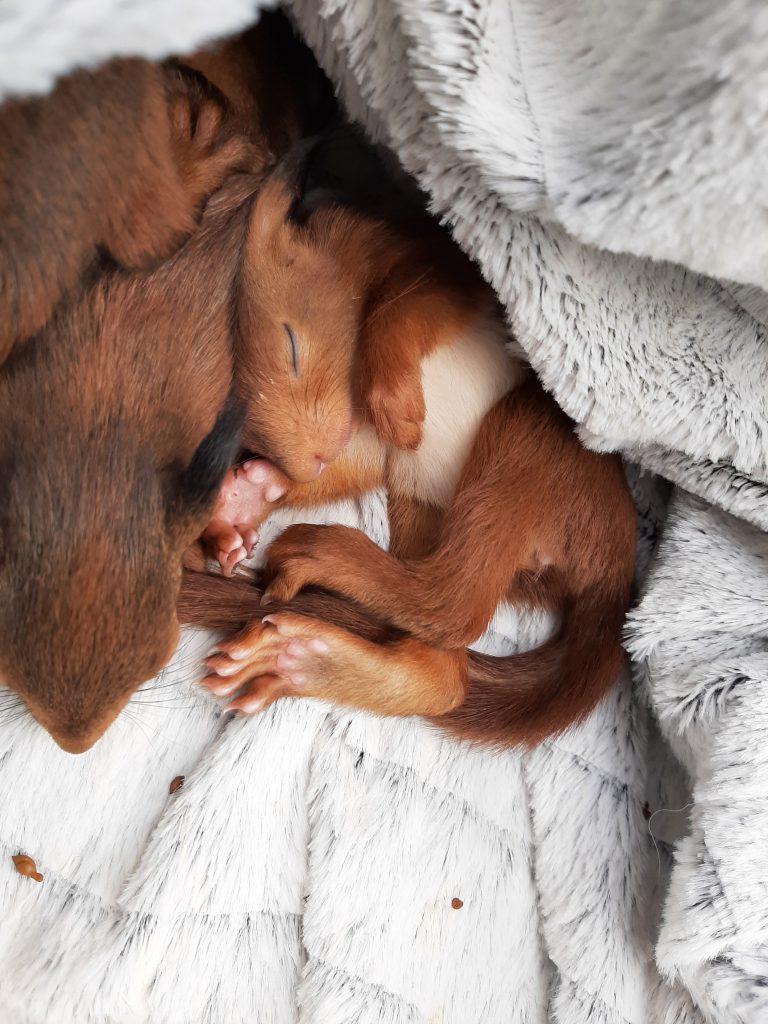
A baby squirrel may fall from its dray for multiple reasons. It could be that a predator has taken them from the dray and dropped them, or a storm has knocked the whole dray from a tree. If you find an infant on the ground, it is important to keep them warm, as all baby mammals are incapable of regulating their body temperature. When you’re out and about without any hot water bottles or heat mats on you, the warmest place you can keep the kit is by your heart. The only concern with this is that you are at risk from any parasites the squirrel may carry, such as fleas.
Once you have the kit safe and warm, please ring the JSPCA. The ambulance driver will come out to collect the squirrel and will try to establish if the dray is nearby and safe to reach to put the kit back, if it is uninjured. If the kit is injured, the ambulance driver will bring them to our vets for medical treatment. If the dray is nowhere in sight, the driver will bring the kit back to the Shelter to be hand-raised. You can always call up the Shelter to find out how the kit is getting on.
PLEASE DO NOT GIVE MILK! All rodents are lactose intolerant and cannot digest cow’s milk.
Protection and Conservation
Red Squirrels are a protected species. Although it may be tempting to try to hand raise an orphaned squirrel, it is an offence for a person to keep, or to have in his or her control or possession a protected wild animal without a license.